
A retaining wall rarely collapses at the time it was built. More often, it gives way seasons later, once water, soil, and slope pressure expose a design that never accounted for them. That kind of failure is exactly what structural retaining wall blocks are built to prevent at the design stage.
On a typical specifications sheet, most big-block systems look interchangeable. This resemblance hides the one thing that actually decides a wall’s durability: the engineering behind it. Most systems look into the environment and solve the structural job, then stop there. However, few bring the science into the ground where the wall entrenches itself.
What Engineered Actually Means for a Retaining Wall
A retaining wall carries two very different jobs, with each one requiring its own solutions. The first is structural: the units and wall must resist the earth’s pressure and surcharge on the face. The second is geotechnical: the wall needs to work well with the soil and water around it. Structural retaining wall blocks earn the name when their designers successfully hurdle both jobs.
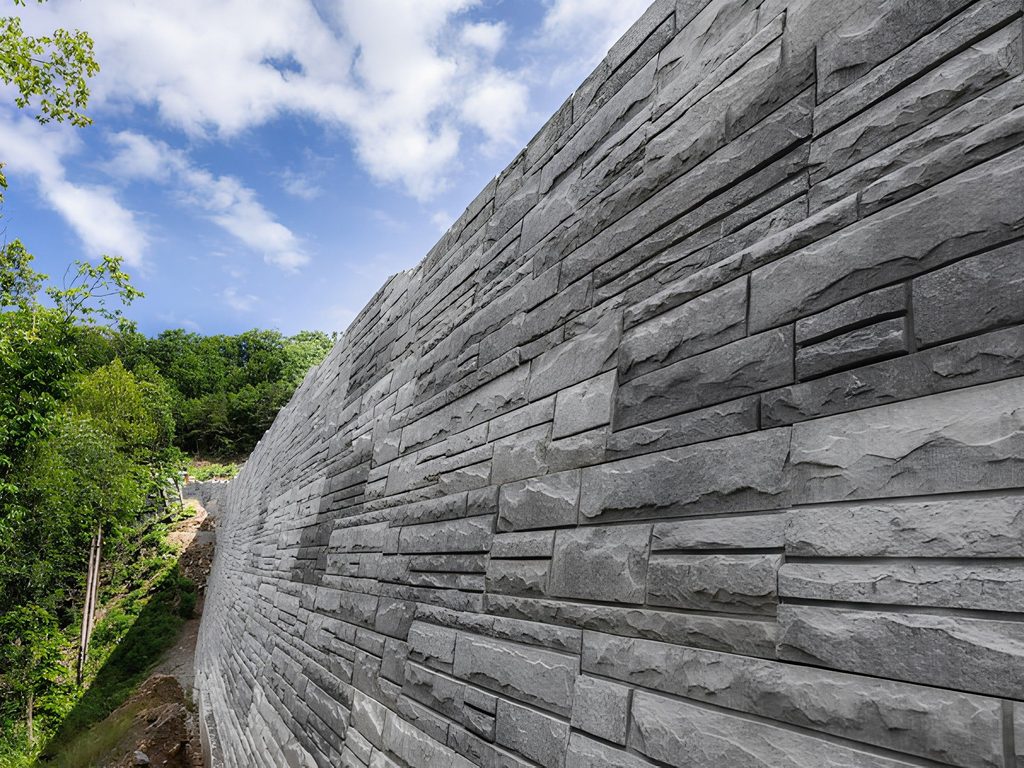
The second task, geotechnical, is where the structure quietly goes wrong. The wall’s whole mass and the soil can slide together. This is a condition that failure engineers call global stability. It turns critical when groundwater sits high or a slope runs above or below the structure. Meanwhile, tiered walls and soft or expansive soils can raise the same risk. Consider a hypothetical wall that passes every structural calculation, then slides on a wet clay seam no one tested. In this case, the units never failed. However, the ground did.
Water is the other half of the geotechnical task. Poor drainage lets pressure build behind a wall until it leans, slides, or collapses. Because that pressure factors directly into the stability analysis, drainage has to be sized alongside it instead of worked out afterward.
Where Structural Retaining Wall Blocks Prove the Difference
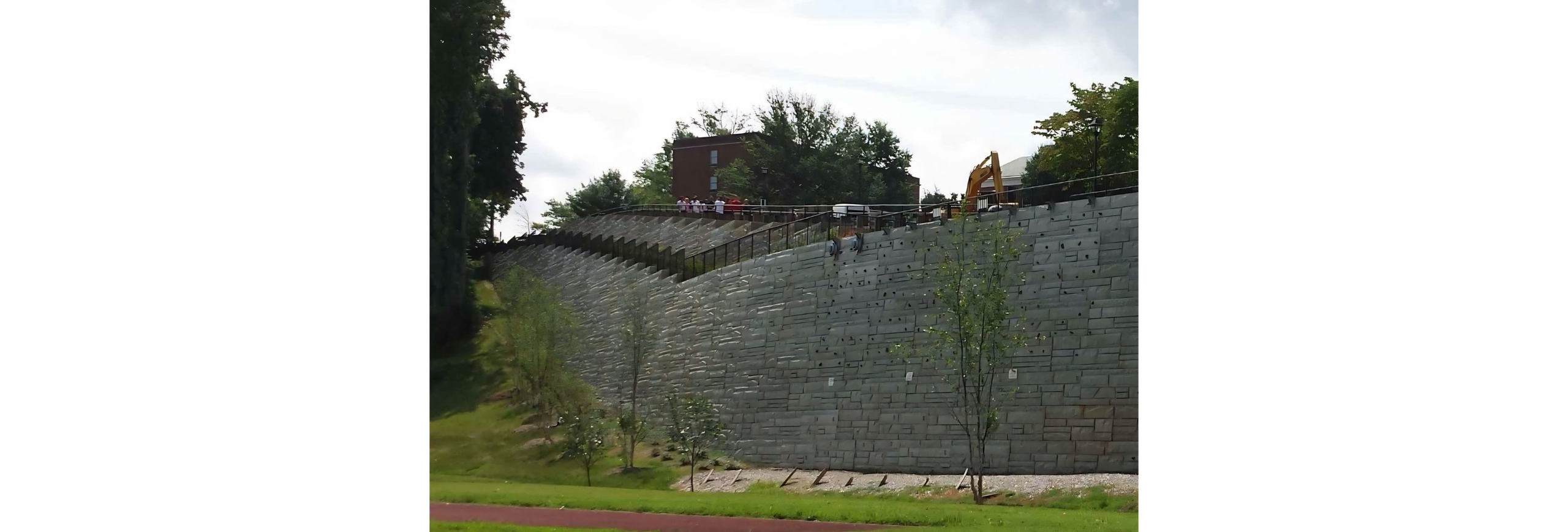
On a sloped site, an engineer has to choose gravity or reinforced sections tier by tier, a decision a flat wall doesn’t require. At Nature’s Edge in Abbotsford, British Columbia, a five-tier wall climbs more than nine meters up a residential slope. It covers roughly 15,750 square feet. It pairs gravity sections with geogrid-reinforced ones, chosen tier by tier to fit the grade.
Reading a slope closely enough to know where each method belongs is engineering work no spec sheet can substitute for. In the case of slopes, deciding where gravity holds and where reinforcement takes over happens at the design table, long before a crew breaks ground. One section holds through sheer block mass, resisting the soil on weight alone. The next locks into the surrounding fill with geogrid, so the reinforced earth and the wall behave as a single structure.
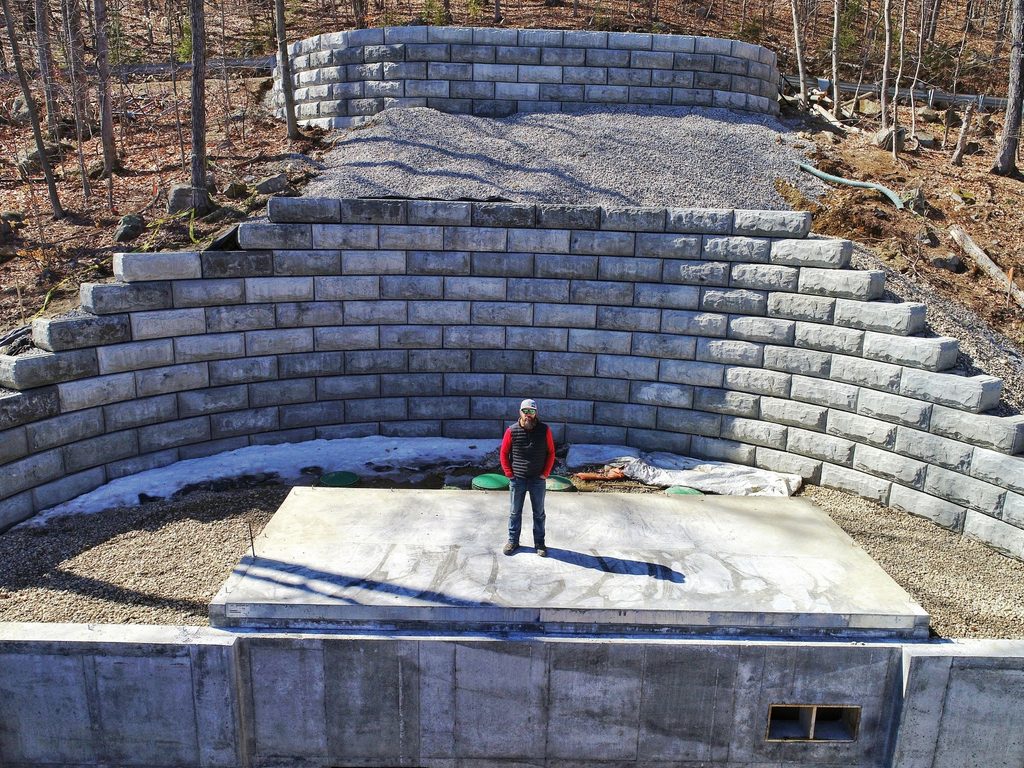
On a tiered slope, meanwhile, global stability governs the design, past the strength of the face alone. Handling it takes a system engineered for the soil and the geometry together, tier over tier. Structural retaining wall blocks that carry this engineering hold a site that a structure-only product could not.
How Stone Strong Engineers Structural Retaining Wall Blocks
Stone Strong built its system around the geotechnical gap other systems leave open. It’s the only modular block engineered both structurally and geotechnically. One process sizes the wall for its loads and its site together. Water drains through the hollow core instead of building up behind the wall. The units also connect without hardware. Alignment loops and stone infill lock each course together, with no pins, clips, or grout to install wrong. Fewer field variables mean the wall that gets built matches the wall on the drawings. One system answers both the structural and geotechnical questions, so the design never depends on stitching a generic block to a separate soil analysis.
The Highway Innovative Technology Evaluation Center (HITEC) evaluated the system and confirmed conformance with standards from the American Association of State Highway and Transportation Officials (AASHTO). Its design also meets national concrete masonry and materials-testing standards. Structural retaining wall blocks vetted to this level clear the municipal reviews that stop weaker systems.
Remember, the cheapest wall on a bid sheet can turn into the most expensive one in the ground. Stone Strong walls carry a 100-year design life and have the engineering to back it. The same structural retaining wall blocks run from tiered hillsides like Nature’s Edge to heavy civil work. If your next project features difficult soil, water, or grade, contact us. We’ll help you engineer wall systems that match your site’s conditions.
Written in partnership with Tom White