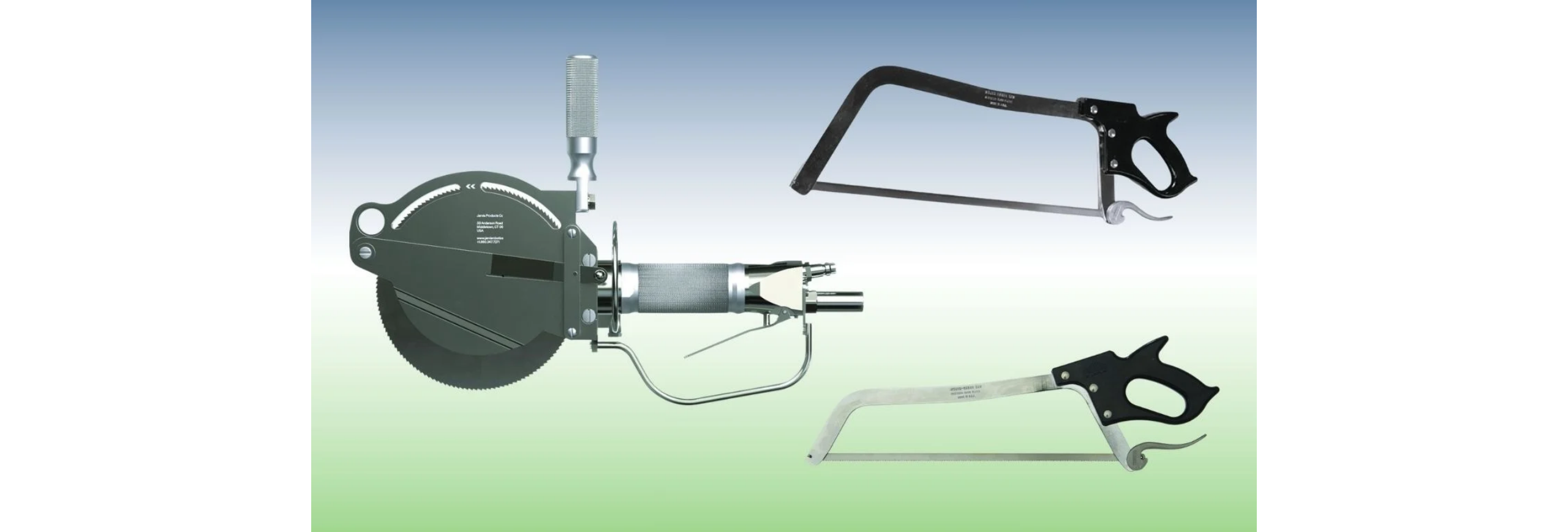

A powered butcher saw falls under fundamentally different safety expectations than its manual counterpart. Most processing lines introduce automated machinery to accelerate throughput. Yet, they fail to account for the accompanying federal machine guarding mandates until an inspector flags a structural violation.
The Occupational Safety and Health Administration (OSHA) general machine guarding standard requires point-of-operation guarding on any machine that exposes an operator to injury. That shielding must sit precisely at the location where work is performed on the material. Because that foundational guideline does not spell out exact dimensions for a commercial butcher saw specifically, facilities must look to specialized provisions.
OSHA addressed that regulatory gap with separate guidance on acceptable guarding for circular meat-cutting saws. A suspended, counterbalanced saw built for two-handed operation needs a guard covering at least 25 degrees of the blade’s circumference. A one-handed suspended saw needs at least 90 degrees of coverage. A non-suspended saw needs at least 120 degrees, regardless of the operating style. All three configurations also require a dead-man control that stops the blade the moment the operator releases it. Strikingly, these detailed requirements reflect the severe structural risks associated with high-velocity cutting surfaces on a busy breaking floor.
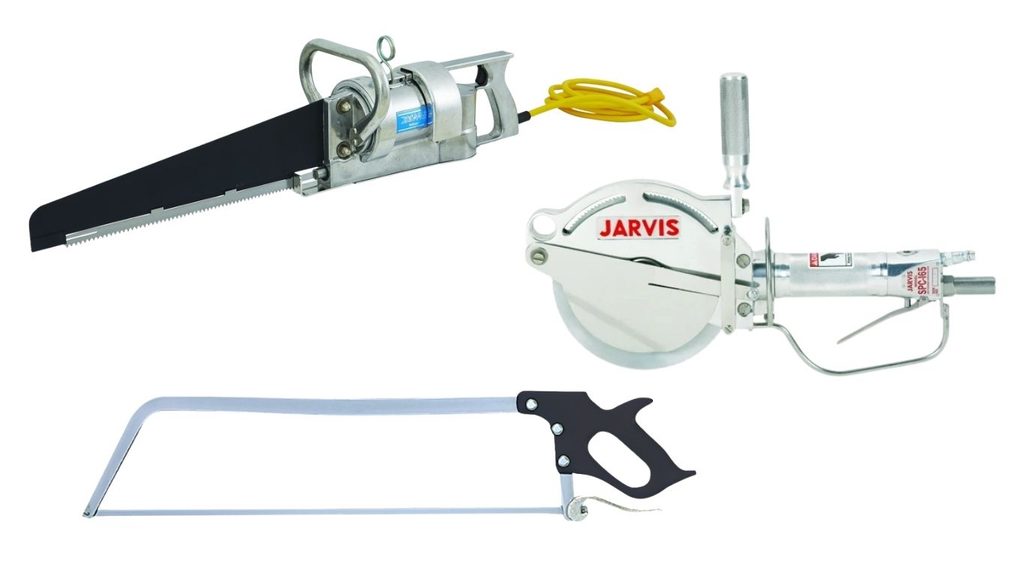
A manual butcher saw carries a real cut risk of its own, but it does not trigger any of these heavy guarding obligations. Because there is no motor-driven blade to guard against, the mechanical footprint remains simple. Any plant adding powered saws needs to budget for guarding, dead-man control verification, and operator training into the purchase decision. The cost of the saw itself is only part of the total capital asset requirement. Facilities must track these auxiliary overhead values alongside daily processing metrics to protect profit margins.
Comparing Maintenance Requirements for Manual and Powered Saws
A manual butcher saw routine is short: technicians check blade tension, confirm the edge sharpness, and replace the blade once it dulls past a usable point. A powered unit adds motor upkeep, drive belt and chain inspection, and guard verification to that same routine. These technical checks require a dedicated schedule built around active operating hours. This focus ensures small physical misalignments do not cause line stoppages.
A loosened guard or a sticking dead-man control becomes an immediate safety problem rather than a simple performance issue. Plants that underestimate this technical difference tend to budget only for the saw itself. They often overlook the added maintenance hours a powered unit demands over its working life. Over multiple shifts, those unlogged maintenance increments can quietly erode production schedules and inflate operational expenditures.
Matching Butcher Saw Specifications to Plant Volume
The operational decision usually comes down to volume and consistency requirements rather than preference alone. A custom shop or a low-volume specialty operation often gets more value from the precise control a manual butcher saw provides. Conversely, a high-throughput plant running standardized cuts gains more from the speed and consistency of an automated saw line. Processing managers must look past individual equipment prices to evaluate total structural efficiency when selecting a specific butcher saw for a high-volume zone.
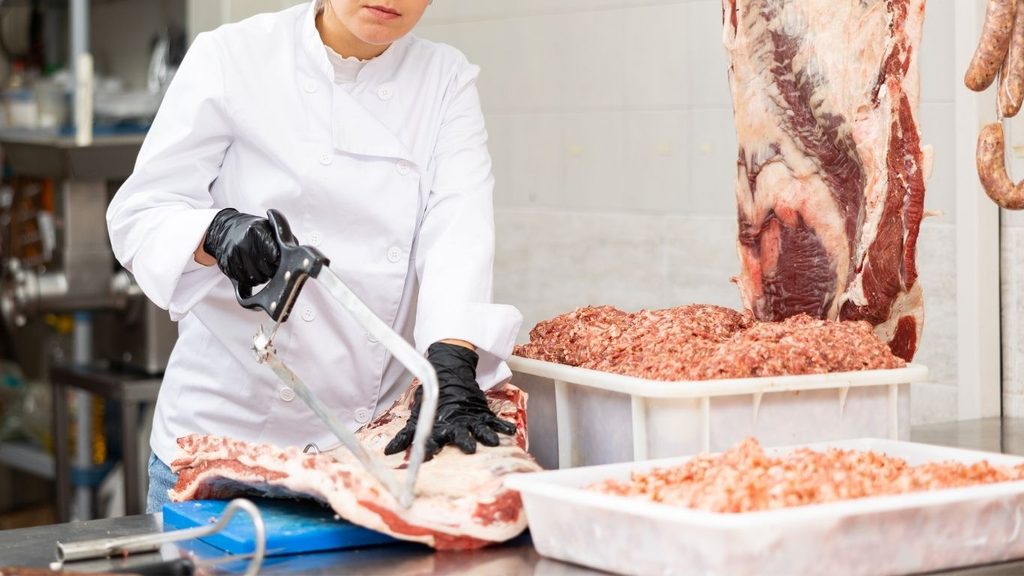
That advantage holds even after accounting for the added maintenance and guarding requirements that come with automated gear. Many facilities run both styles, reserving manual tools for intricate detail work and powered units for standard production cuts. Splitting line roles this way keeps workers highly productive. It also minimizes the total wear on expensive motorized equipment.
Auditing Your Processing Floor Layout
At Bunzl Processor Division, we recommend reviewing your cut specifications station by station to determine whether the primary limiting factor is precision, speed, or both. Stations where custom accuracy outweighs volume are excellent candidates to keep on manual hand tools. High-volume standard cuts usually justify the capital investment in powered machinery, the guarding it requires, and the structural safety training that goes with it.
Bunzl Processor Division offers a comprehensive selection of industrial hand tools, automated circular saws, and replacement components engineered for meat processing facilities of all sizes. Technical teams can use OSHA’s machine guarding regulations to build an objective safety baseline for every station before installing new hardware. Explore our complete cutlery and blades catalog for our complete lineup of cutting tools and accessories. If you want to optimize the equipment layout on your production floor and need advice, you can reach a meat processing expert directly by submitting our ‘Ask An Expert’ online form.
Written in partnership with Tom White